
A road sweeper brings loose material into a collection path, lifts it and stores it until the vehicle unloads. Depending on the model, that path uses rotating brushes, suction airflow, water spray or a combination. Understanding the sequence helps operators spot a blocked nozzle, worn brush or failed dust-control system before performance deteriorates.
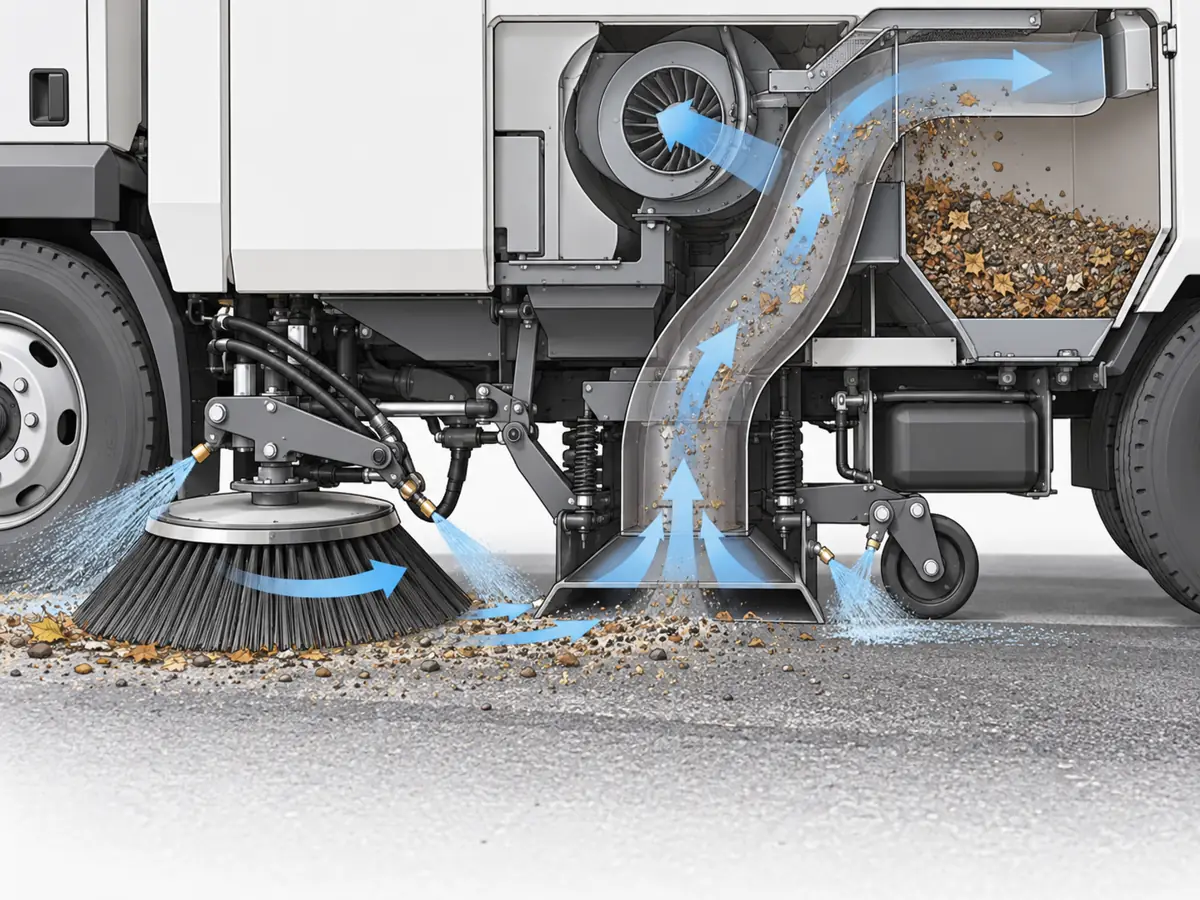
Follow the material from road to hopper
- Brushes guide debris. Side brushes move material from the road edge toward the machine's collection path. Their contact height and wear matter.
- A suction nozzle lifts loose material. On vacuum models, a fan creates airflow through the nozzle and duct. Large objects or compacted mud may block the opening.
- The hopper separates and stores material. Screens, baffles or filters vary by design. The hopper must eventually be emptied at an approved location.
- Water manages dust or provides washing. Some models spray to suppress dust; washing-and-sweeping machines use a separate wash circuit. Water is not a universal requirement for every dry-suction mode.
What each component contributes
| Component | Job | Practical check |
|---|---|---|
| Side brush | Moves edge material into collection width | Wear, height and contact pattern |
| Suction nozzle and duct | Carries loose debris into the hopper | Blockages, damage and clearance |
| Fan and filtration | Maintains airflow and controls exhaust dust | Filters, seals and maintenance indicators |
| Water pump and nozzles | Suppresses dust or washes the surface where fitted | Supply, spray pattern and blocked jets |
| Hopper and door | Holds and discharges collected material | Fill level, seals and discharge safety |
The exact equipment list is model-specific. Use the vehicle manual and signed technical schedule for adjustment points and safe isolation procedures.
When cleaning performance drops
First observe what is left behind: a dust film, a line of coarse debris, a wet streak or material at one edge. Then check the relevant path safely. Worn brushes can miss the road surface; a blocked suction duct can reduce collection; dirty filtration or damaged seals can compromise airflow. For washing modes, check water supply and nozzle pattern. Stop the machine and follow the manufacturer's lockout and maintenance instructions before reaching near moving parts or opening a pressurised system.
Match operation to material
Fine dust calls for effective collection and dust control. Wet silt can adhere to the surface and obstruct suction paths. Leaves may fill a hopper quickly. Adjust speed and operating mode only within the manufacturer's instructions; a slower pass or different mode may help, but no setting guarantees a result on every surface.
For choosing a system based on Nigerian road conditions, see Street Sweepers for Nigerian Councils. For a model-specific quotation, browse the Road Sweeper Trucks catalogue or send your route details.
Frequently asked questions
Must a street sweeper use water?
Not always. Some machines have a dry-suction mode, while others need spray for dust control or water for washing. Follow the operating manual and applicable dust-control requirements for the selected vehicle.
How does the hopper empty?
Many truck-mounted sweepers use a hydraulic tipping or discharge mechanism, but the design varies. Confirm the unloading method, clearance and safety procedure for the exact model.