
Three questions should come before hopper size: what debris is on the road, where can the vehicle refill or unload, and how much of the route has a usable kerb? Dry-season dust and rain-washed silt are different jobs. A larger tank or hopper will not compensate for the wrong collection system.
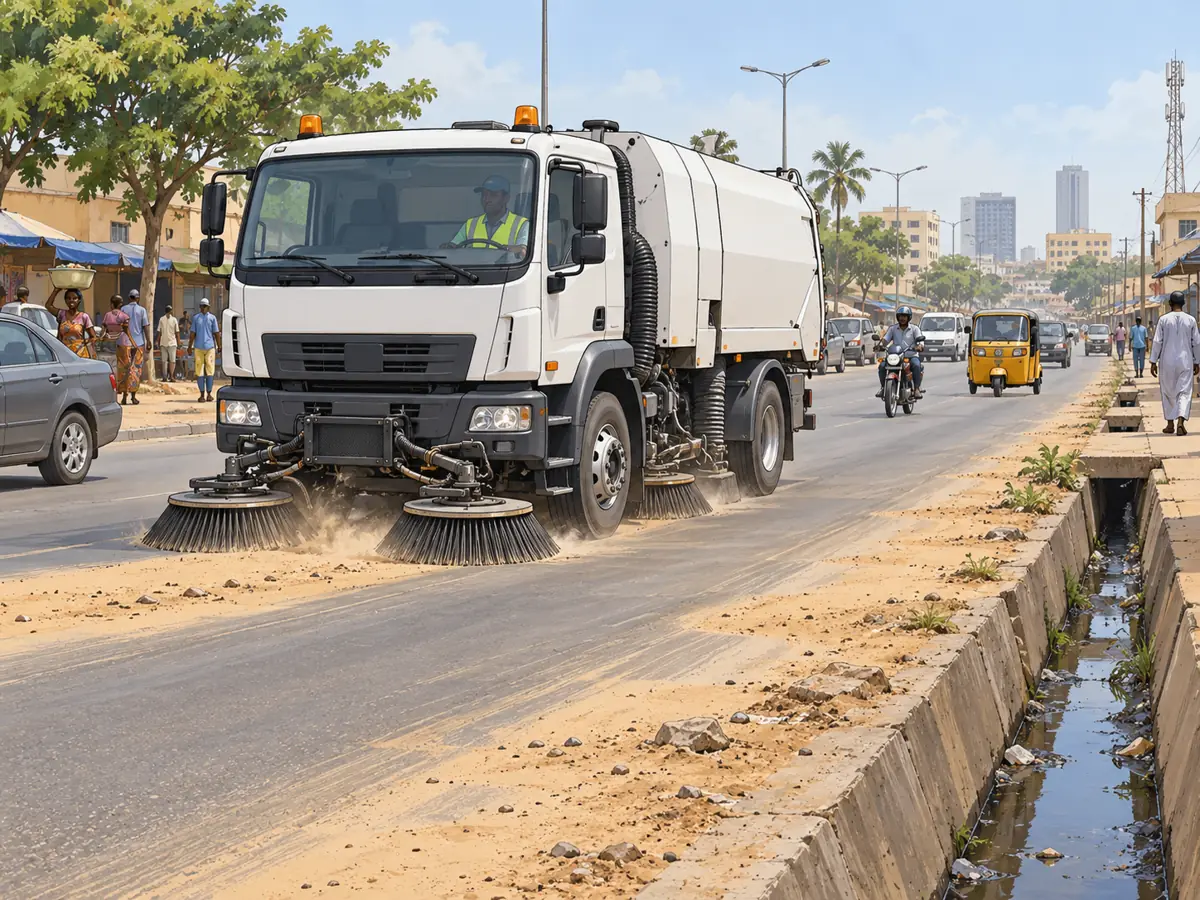
Measure the route before comparing models
- Debris by season: Record fine dust, sand, leaves, litter and wet silt separately. Photograph representative sections in each season.
- Kerbs and drains: Note where a side brush can actually follow a kerb and where an open drain or buried edge changes the task.
- Water and unloading points: Measure travel time to refill and empty the hopper, not only distance on a map.
- Clearance: Use the narrowest street, tightest turnaround and lowest obstruction, rather than route averages.
- Daily duty: State actual kilometres cleaned and productive hours per shift.
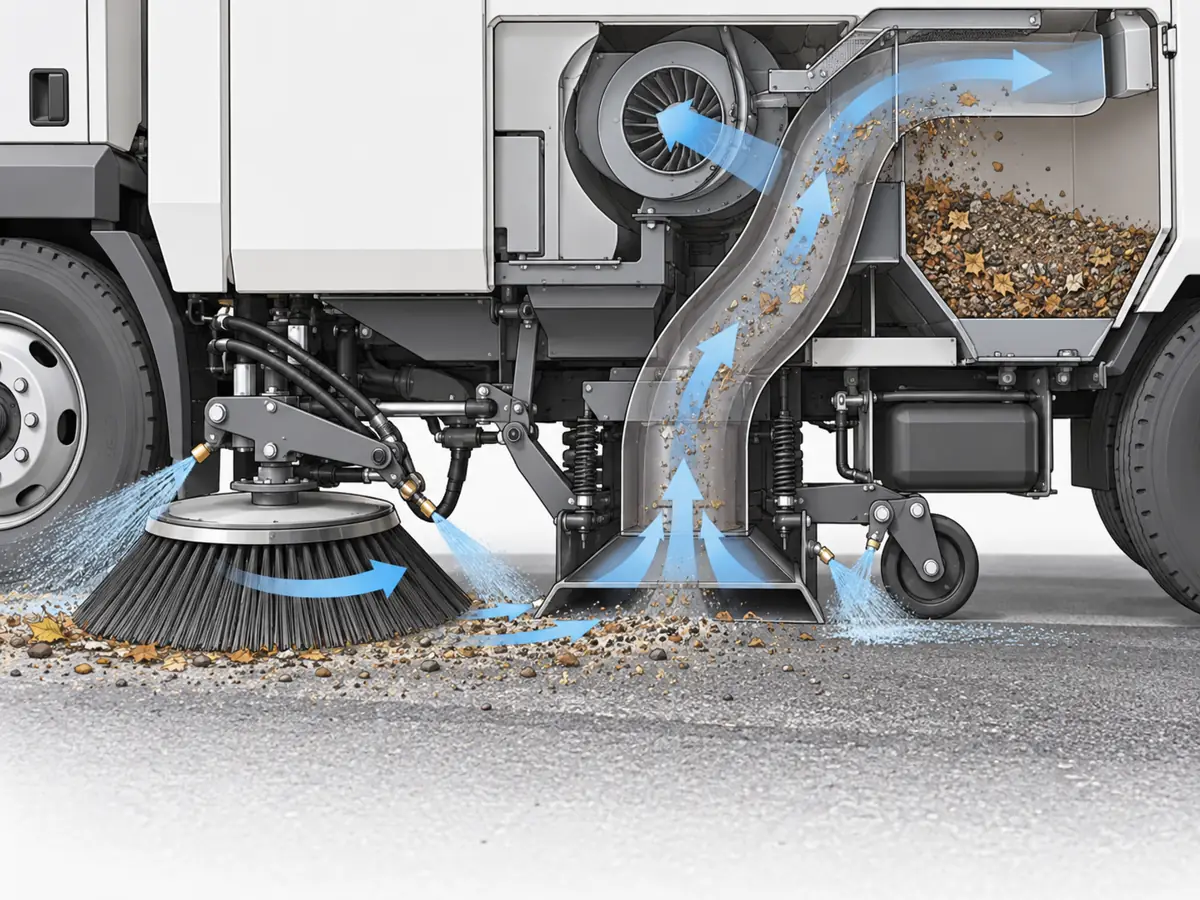
Compare the collection systems
| System | Best starting use case | Main limitation to check |
|---|---|---|
| Mechanical broom | Coarser sand, leaves and scattered litter | Fine dust may be disturbed unless dust control is effective. |
| Vacuum or suction | Loose fine material where collection and filtration matter | Filters, airflow path and suction nozzle need regular inspection. |
| Combined washing and sweeping | Adhered dirt and wet deposits where water is available | Water consumption, payload and refill time can shorten the working cycle. |
These are selection principles, not promises that every vehicle will handle every material. Ask for a demonstration on debris comparable to your route. Compare the actual sweeping mode, water use and legal payload in the signed specification.
Estimate a working cycle with your own figures
The limiting factor may be the hopper, the water tank or travel to a service point. Use measured route data and request configuration-specific consumption figures.
| Calculation | Formula | Input to verify |
|---|---|---|
| Effective cleaning rate | Working speed × route factor | Traffic, parked vehicles and turning losses |
| Distance before unloading | Usable debris payload ÷ collected debris per kilometre | Weigh a representative test section |
| Minutes before refilling | Usable water volume ÷ consumption per minute | Nozzle setting and operating mode |
For example, 18 km/h × 0.5 = 9 effective km/h. If usable debris payload is 1,000 kg and a measured route yields 60 kg/km, the estimate is 16.7 km, or about 1.9 hours at that effective rate. These numbers illustrate the method only; they are not a specification or performance guarantee. Water consumption cannot be estimated responsibly without the selected machine's mode and nozzle data.
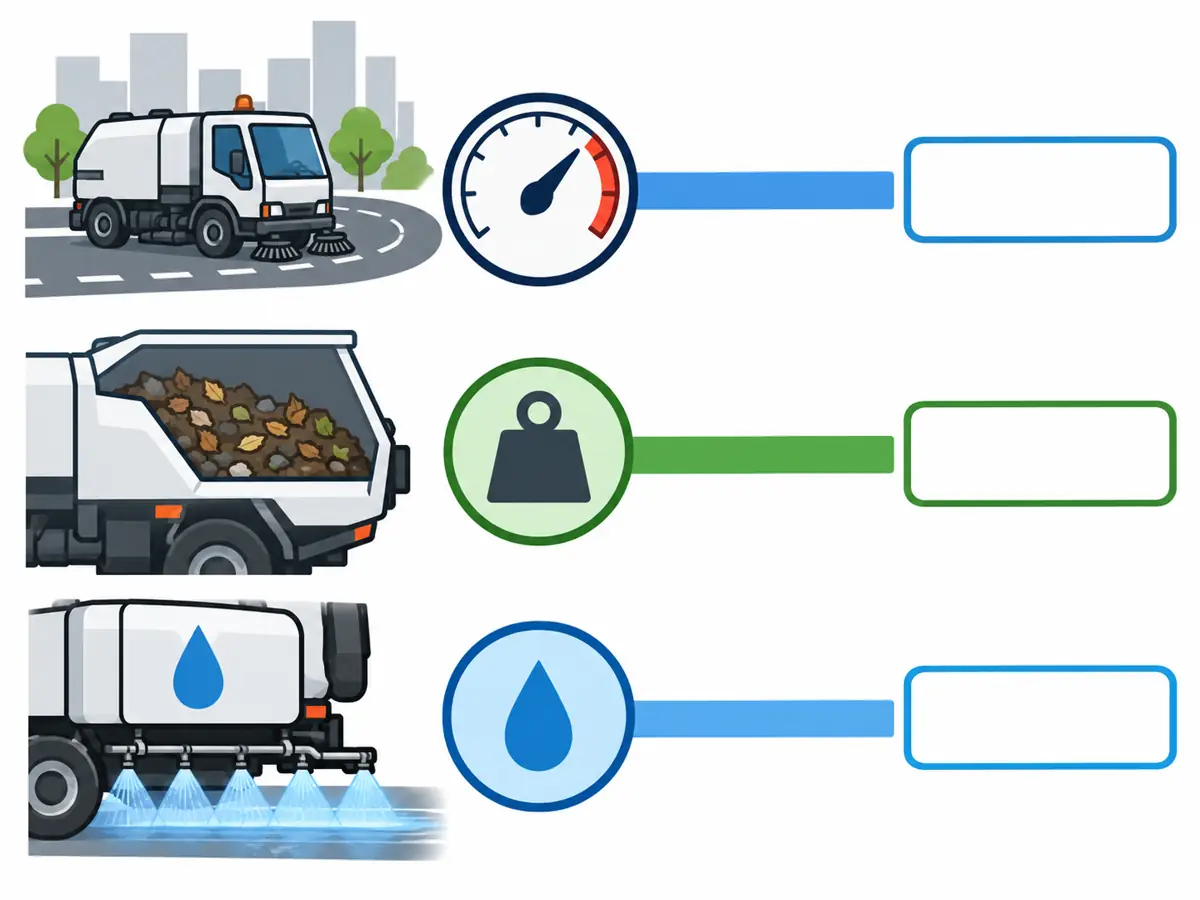
Whichever limit is reached first sets the practical work cycle. A larger hopper does not help when the water tank empties first; a larger water tank does not help when unloading travel dominates.
Confirm fit and payload
Ask the supplier to specify steering position, dimensions, wheelbase, gross vehicle weight and a payload split for the offered configuration. Water, collected debris, crew and equipment all consume legal payload. Confirm destination registration and import requirements with a Nigerian clearing agent before signing the final vehicle specification.
Plan for filter cleaning, brush wear, nozzle checks and safe access to service points. The service interval must come from the selected equipment's manual and actual dust load, not a generic brochure.
Send useful information with your enquiry
Send road photographs, seasonal debris description, route length, working hours, narrowest clearance, water source, unloading point, destination port and quantity. If the purchase is a tender, include the technical schedule and deadline. We can then compare suitable models in the Road Sweeper Trucks catalogue against your route. For the document and quotation sequence, use the Nigeria road sweeper RFQ checklist. You can also send your route details.
Frequently asked questions
Can one machine cover dry dust and rain-washed silt?
A combined machine may offer different operating modes, but the suitability of each mode depends on the actual debris, filter arrangement, water supply and offered configuration. Request a model-specific demonstration or test criteria.
Does a street sweeper always need water?
No. Some dry-suction systems can operate without a washing circuit. Dust-control requirements and safe operating instructions still depend on the machine and conditions; never assume dry operation is acceptable for a particular model without checking its manual.
Which hopper size should we choose?
Start with measured debris per kilometre, usable payload, route length and unloading time. Confirm whether quoted capacities refer to the debris hopper, clean-water tank or recovered-water tank.