
There is no fixed price for a garbage truck without an agreed engineering specification. Final procurement costs depend on vehicle superstructure type, body volume, chassis brand, steering configuration, emission standards, hydraulic options, and international shipping terms. To evaluate quotes accurately, municipal buyers and fleet operators must compare itemized specifications against identical operating conditions and trade terms.
What determines the price of a garbage truck?
The total procurement price of a waste collection vehicle depends directly on technical specifications, chassis selection, and target market operating environments.
1. Superstructure and Mechanism Design
Different collection methods demand fundamentally distinct body engineering, steel usage, and hydraulic systems:
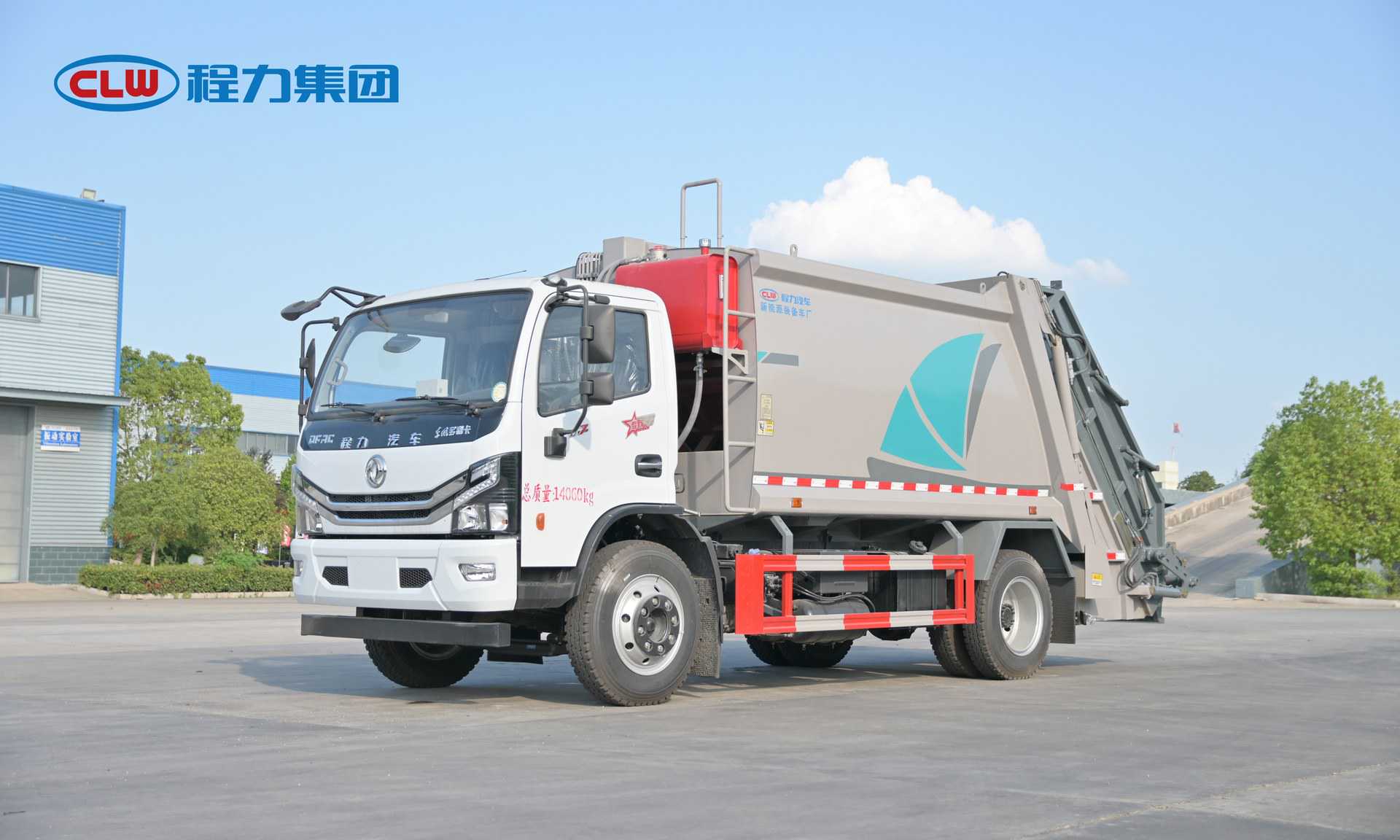
Rear Compactor Trucks: Feature heavy-duty packing plates, dual hydraulic ejector cylinders, and high-tensile steel bodies to achieve significant volume reduction. Suitable for high-density municipal solid waste routes; not suitable for bulk construction rubble or oversized industrial debris.
Skip Loaders: Use dual hydraulic lift arms and rear stabilizer legs to haul standardized open-top containers. Suitable for short-range transfers and renovation waste; not suitable for routes requiring high compaction ratios.
Hooklift Trucks: Rely on a high-capacity tilting hoist hook to pick, drop, and exchange multi-purpose roll-on/roll-off containers. Suitable for multi-site municipal hubs needing flexible bin management; not suitable for routes with low overhead height clearances.
Food Waste Trucks: Equipped with fully welded liquid-tight bodies, specialized Archimedean or push-out scrapers, wash systems, and sealed tailgates. Suitable for organic restaurant waste and slurry collection; not suitable for dry, uncompacted municipal packaging.
2. Body Volume vs. Legal Payload Capacity
A larger body volume does not automatically yield a higher payload. Body sizes vary across single-axle, tandem-axle, and multi-axle platforms. Pricing changes significantly based on axle load ratings: a high-capacity body paired with an entry-level axle weight rating may exceed municipal road limits when fully loaded, forcing buyers into costlier multi-axle chassis platforms.
3. Chassis Brand and Drivetrain Configuration
The chassis typically accounts for 50% to 65% of the total vehicle base cost. Options range from standard domestic chassis (such as Dongfeng, FAW, Foton, and Sinotruk) to global joint-venture platforms (such as Isuzu). Furthermore, drivetrain configurations (4x2, 6x4, 8x4, or all-wheel drive 4x4/6x6) substantially alter tire load capacity, engine displacement, and chassis procurement costs.
4. Steering Side: LHD vs. RHD
Left-Hand Drive (LHD) represents standard factory assembly line production for Chinese commercial vehicle platforms. Right-Hand Drive (RHD) configurations require dedicated steering boxes, modified dashboard tooling, re-routed electrical harnesses, and adjusted brake linkages, typically incurring factory surcharges and extended build times.
5. Emission Standards
Chassis engines must match the regulatory standard of the destination country:
Euro 2 / Euro 3: Mechanical fuel injection or early common-rail systems, suitable for regions with variable fuel quality and lower refining standards.
Euro 5 / Euro 6: High-pressure common rail engines equipped with Selective Catalytic Reduction (SCR), Diesel Particulate Filters (DPF), and AdBlue injection systems. These engines require ultra-low sulfur diesel (ULSD) and add substantial compliance costs to the chassis.
6. Bin Lifter / Lifting Mechanisms
Lifting mechanisms vary according to container specifications. Factory-fitted lifters must match destination bin standards—such as comb lifters for two-wheeled 120L/240L EN 840 plastic bins, trunnion arms for four-wheeled 660L/1100L steel bins, or skip-arm chains for 3m³–6m³ skips. Customized dual-purpose lifters or heavy winch attachments increase upfront equipment pricing.
7. Optional and Severe-Duty Equipment
Working in extreme climates requires optional engineering packages:
Corrosion-resistant weathering steel or stainless steel floor plates for humid, high-saline coastal zones.
Enlarged secondary leachate collection tanks for high-moisture organic waste.
High-temperature hydraulic oil coolers and dual-stage desert air intake pre-filters.
Rear-view cameras, automatic throttle advance, and emergency stop interlocks.
8. Target Market Regulatory Compliance
Vehicles destined for specific export markets often require mandatory pre-shipment safety inspections, homologation paperwork, local lighting conversions, rear underrun protection compliance, or specialized marking tape matching municipal traffic laws.
What is normally included in a supplier’s quotation?
The following table shows the usual quotation scope and the checks buyers should request in writing.
Quotation item | Usual status | Buyer verification checklist |
|---|---|---|
Chassis | Typically included | Brand, model code, engine model, GVW, power rating and emission standard. |
Waste body | Typically included | Internal volume, steel grade, plate thickness and compaction cycle time. |
Bin lifter | Optional or variant | Bin standard and compatibility with 120 L, 240 L, 660 L or 1,100 L containers. |
Export certification | Conditional | Required pre-shipment inspections and destination-market approval documents. |
Freight | Depends on Incoterm | Confirm EXW, FOB, CFR or CIF and the named port. |
Spare parts | Optional or contractual | Itemised filters, wear pads, seals and sensors with quantities. |
Commissioning and training | Conditional | Manuals, remote diagnostics and any agreed on-site support. |
Why can two similar-looking trucks have very different prices?
Two rear compactors carrying the same nominal capacity can differ materially in structural steel, hydraulic design, chassis rating, safety controls and warranty scope.
Steel Grade and Plate Thickness: Lower-cost bodies typically utilize standard 3mm to 4mm Q235 carbon steel. Heavy-duty units use 4mm to 6mm high-strength wear-resistant steels (such as Q345 or premium anti-abrasion plates), which resist leachate corrosion and mechanical wear for years longer under high compaction forces.
Hydraulic System Quality: Entry-level units use low-cost manual spool valves and single-circuit hydraulic gear pumps. Higher-tier builds install dual-circuit hydraulic setups, proportional directional control valves, Italian or Japanese brand pilot valves, and seamless micro-honed hydraulic cylinders with multi-lip seal packs.
Compactor Cycle Mechanism: Basic push-plate designs exert lower compaction ratios (typically 1:2 to 1:3). Engineered bidirectional compaction cycles with optimized geometry reach ratios of 1:5 or higher, requiring reinforced packing panels and structural guide channels.
Chassis Load Ratings: A low-cost 12m³ truck may be mounted on a light-duty, single-axle chassis operating near its mechanical gross axle weight rating (GAWR). A commercial-grade unit uses a heavy-duty chassis with reinforced chassis beams, multi-leaf spring suspensions, and higher axle ratings to safely haul high-density compacted waste.
Safety Interlocks and Electrical Controls: High-specification trucks integrate programmable logic controllers (PLC), two-hand cycle operation controls, emergency override buttons, and tailgate safety prop interlocks to protect operational crews.
After-Sales and Technical Support: Lower baseline bids frequently omit consumable wear kits, offering only basic ex-factory parts replacement, whereas comprehensive packages bundle full initial service filters, English-language service schematics, and remote diagnostic warranties.
How should buyers compare quotations?
To avoid incomplete comparisons, fleet managers should enforce a standardized Request for Quotation (RFQ) sheet across all prospective manufacturers:
Destination Country & Port: Specify the target port of discharge (e.g., Mombasa, Tema, Lagos) to establish firm logistics calculations.
Waste Characteristics: Define the waste type (high-moisture domestic waste, commercial dry waste, market wet waste) and estimated uncompacted bulk density (kg/m³).
Required Body Capacity: State geometric internal volume (m³) alongside maximum targeted legal net payload weight (kg).
Bin Sizes and Interfaces: List every municipal container style in current use (e.g., 240L plastic comb, 1100L metal trunnion).
Road Profile and Climate: Document off-highway landfill access requirements, steep gradients, extreme ambient temperatures, or unpaved routes.
Chassis and Steering Parameters: Confirm required steering side (LHD or RHD), wheel configuration (4x2, 6x4), and operational fuel grade/sulfur levels.
Required Emission Tier: Specify local regulatory compliance (Euro 2 through Euro 6).
Quantity and Timeline: Indicate single-unit trial procurement or bulk fleet delivery milestones.
What costs appear after the factory price?
Procuring a vehicle on Ex-Works (EXW) or Free on Board (FOB) terms represents only the initial portion of the capital expenditure. The full Landed Cost structure includes:
China Inland Transport: Delivery from the production facility to the designated Chinese loading seaport (e.g., Shanghai, Qingdao, Tianjin).
Port and Export Formalities: Port terminal handling charges (THC), export customs documentation, and storage fees.
Ocean Freight: Ocean transit on specialized Ro-Ro (Roll-on/Roll-off), Breakbulk, or Flat Rack/Container platforms. Rates fluctuate based on carrier availability and vehicle dimensions.
Marine Cargo Insurance: Institute Cargo Clauses (A) all-risk transit protection covering open-water transport.
Destination Regulatory Inspections: Pre-export or post-arrival verification documentation (such as KEBS PVOC, SONCAP, or other regional standards bureau certificates).
Import Duties, VAT, and Port Surcharges: National customs tariffs, excise duties, local VAT, and clearing agent brokerage fees at the destination port.
Port Demurrage and Wharfage: Local port terminal dwell fees, unlashing charges, and wharfage tariffs.
Inland Transit to Destination Depot: Transit transport from the destination harbor to the municipal vehicle depot.
Vehicle Registration and Local Road Homologation: National road transport authority licensing, roadworthiness checks, commercial plate assignments, and local safety marking requirements.
Commissioning, Spares, and Crew Training: Initial fluid top-offs, hydraulic filter changes, and driver/mechanic operational training.
What are the most common pricing mistakes?
Comparing Unaligned Incoterms: Evaluating an EXW or FOB quote against a CIF quote. Freight and insurance can represent a large share of the landed capital layout.
Treating Geometric Body Volume as Legal Payload: Assuming an 8m³ or 12m³ body will automatically legally carry high-density wet refuse on a single-axle chassis without violating regional axle load limits.
Omitting Bin Lifter Interface Specifications: Ordering standard comb lifters when local municipal districts use four-wheel trunnion bins or custom metal roll-carts, requiring costly site welding after delivery.
Failing to Verify Steering and Emission Regulations: Ordering lower-cost LHD chassis into RHD countries, or importing Euro 5 common-rail engines into areas lacking Ultra-Low Sulfur Diesel (ULSD).
Using Expired Ocean Freight Estimates: Relying on freight quotes older than 14–30 days during periods of global shipping capacity shifts.
Accepting Marketing Leaflets Instead of Contract Data Sheets: Finalizing purchase contracts based on general sales brochures rather than an itemized, engineering-approved technical specification sheet.
Frequently Asked Questions
How much does a new garbage truck cost?
A new commercial waste truck has no uniform standard price. Final equipment investments depend on the selected chassis brand, gross vehicle weight rating, body displacement volume, hydraulic mechanism quality, and shipping terms. Itemized factory pricing requires a fully defined technical specification sheet.
Is a larger refuse truck always more expensive?
A larger body volume generally requires a heavier chassis platform, more structural steel, and larger hydraulic systems, which raises the purchase price. However, a highly automated, corrosion-resistant smaller compactor with advanced proportional hydraulics and safety electronics can cost more than a basic, large-volume truck built with standard mild steel.
Does RHD cost more than LHD?
Right-Hand Drive (RHD) chassis typically carry a price premium over standard Left-Hand Drive (LHD) models. Chinese commercial vehicle assembly lines run LHD as the standard configuration; RHD units require specialized steering linkages, cab sub-assemblies, and dedicated production scheduling.
Is shipping included in the quoted price?
Shipping is only included if explicitly agreed under Incoterms such as CFR (Cost and Freight) or CIF (Cost, Insurance, and Freight) to your designated port of entry. Standard FOB quotations cover expenses only up to loading onto the vessel at the Chinese port; all ocean logistics, transit insurance, and local port duties remain the responsibility of the buyer.
What information is needed for a firm quotation?
A binding quotation requires the buyer's destination country and port, municipal waste profile, preferred body capacity, local bin mechanical interface, operational terrain conditions, steering configuration (LHD/RHD), and applicable engine emission standards.
Configuration-Based Inquiries & Related Resources
To receive a configuration-matched technical quote, provide your destination port, local waste density, preferred body capacity, bin interface specifications, and chassis requirements.
Explore Vehicles: Review functional mechanism options and structural specifications in our Refuse Trucks product catalogue.
Vehicle Capacity Planning: Learn how to balance volumetric capacity against legal axle payload limits in our refuse compactor capacity guide.
Market-Specific Guidelines: Review regional procurement and operating considerations in our Markets section.